
Introduction
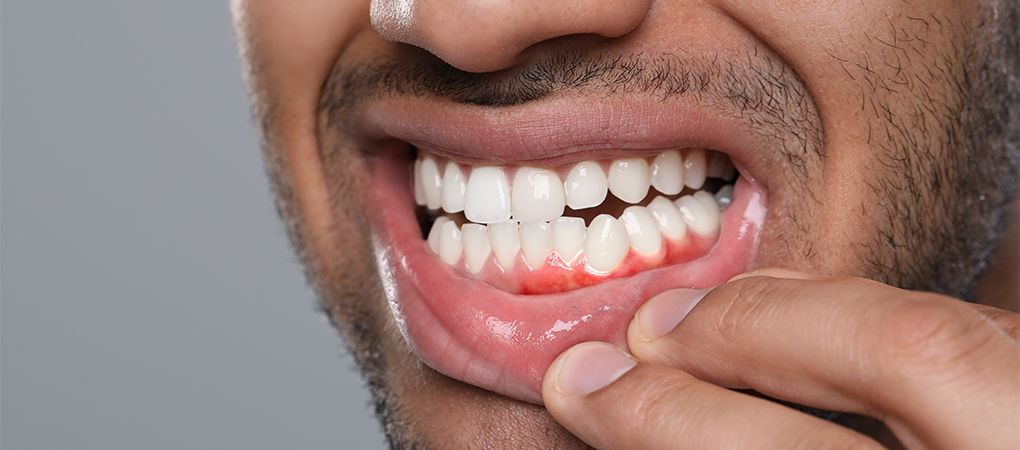
Spit out toothpaste with a pink tinge often enough, and it starts to feel routine — easy to blame on brushing too hard or a stiff toothbrush. But bleeding gums are rarely just cosmetic. In the vast majority of cases, they’re the earliest visible sign that gum disease has already started.
This matters more than most people realise. According to the U.S. Centers for Disease Control and Prevention, 42.2% of adults aged 30 and older have some form of periodontitis, and nearly 8% have a severe form of it. Much of this progression happens quietly, with bleeding gums as the first, easy-to-dismiss clue.
This guide explains why gums bleed, how gum disease actually progresses, and what you can do to catch it while it’s still fully reversible.
Why Do Gums Bleed in the First Place?
Healthy gums don’t bleed during normal brushing or flossing. When they do, it’s almost always due to inflammation caused by plaque — a sticky film of bacteria that constantly forms along the gumline, even with regular brushing.
Here’s the sequence:
- Plaque builds up along and slightly beneath the gumline within 24 to 48 hours of not being properly cleaned
- Bacteria in the plaque irritate the gum tissue, triggering inflammation
- Inflamed gum tissue becomes fragile and bleeds easily, even with gentle brushing
- If plaque isn’t removed, it hardens into tartar (calculus) within days, which a toothbrush cannot remove
- Tartar buildup worsens the inflammation, and the condition progresses from gingivitis toward periodontitis
This is precisely why bleeding gums shouldn’t be brushed off (quite literally) as a brushing technique issue. It’s usually a sign that plaque has already had time to irritate the gum tissue.
Gingivitis vs Periodontitis: Understanding the Two Stages
Gingivitis (Early, Reversible Stage)
Gingivitis is inflammation limited to the gum tissue, without any damage to the bone or ligaments holding your teeth in place. Symptoms include:
- Red or swollen gums
- Bleeding during brushing or flossing
- Mild bad breath
The CDC notes that gingivitis is fully reversible with consistent oral hygiene and professional cleaning. This is the stage where catching the problem early makes the biggest difference.
Periodontitis (Advanced, Irreversible Damage)
If gingivitis isn’t treated, the infection spreads below the gumline and begins to damage the bone and connective tissue that hold your teeth in place. Unlike gingivitis, this damage doesn’t fully reverse — it can only be managed and stopped from progressing further. Symptoms include:
- Gums pulling away from teeth (receding gums)
- Persistent bad breath
- Loose or shifting teeth
- Pus between teeth and gums
- Changes in how your teeth fit together when biting
Left untreated, periodontitis is the leading cause of adult tooth loss.
Who Is Most at Risk?
While anyone can develop gum disease, certain factors significantly increase the risk. According to CDC data, periodontitis prevalence is notably higher among smokers, men, and people with diabetes, with current smokers showing some of the highest rates of any group studied.
Other risk factors include:
- Inconsistent brushing and flossing habits
- Diabetes, which impairs the body’s ability to fight infection
- Hormonal changes (pregnancy, menopause) that increase gum sensitivity
- Certain medications that reduce saliva flow
- Genetics — some people are simply more prone to gum inflammation
- Crooked or crowded teeth that are harder to clean thoroughly
What to Do If Your Gums Are Bleeding
At Home
- Switch to a soft-bristled toothbrush if you haven’t already
- Brush gently in small circular motions rather than aggressive back-and-forth strokes
- Floss daily — bleeding often improves within one to two weeks of consistent flossing, even though it may temporarily seem to bleed more at first
- Use an antibacterial mouth rinse if recommended by your dentist
At the Clinic
Home care alone cannot remove hardened tartar. Professional scaling is the only way to clear tartar buildup below the gumline and give inflamed gums a genuine chance to heal. Depending on how advanced the gum disease is, your dentist may recommend:
- Routine scaling and polishing for early-stage gingivitis
- Deep cleaning (root planing) for more established plaque and tartar below the gumline
- [Flap surgery](/flap-surgery/) for advanced periodontal disease where deep infection needs to be surgically accessed and cleaned
How Long Does It Take for Bleeding Gums to Heal?
With consistent home care and professional scaling, mild gingivitis often improves within one to two weeks. More established gum disease may take several weeks of treatment and improved hygiene before bleeding fully resolves. If bleeding continues beyond two to three weeks despite good oral hygiene, it’s a sign the condition needs a professional evaluation rather than more time.
Common Myths About Bleeding Gums
Myth: Bleeding gums mean you should brush less or more gently to avoid irritating them further.
Fact: Reducing brushing allows more plaque to build up, worsening the underlying cause. The better response is gentler technique with a soft brush, not less frequent brushing.
Myth: If it doesn’t hurt, it’s not serious.
Fact: Gum disease is often painless until it reaches an advanced stage, which is exactly why bleeding — not pain — is the reliable early warning sign to watch for.
Myth: Bleeding gums during pregnancy are unavoidable and not worth treating.
Fact: While pregnancy hormones do increase gum sensitivity, “pregnancy gingivitis” still benefits from professional cleaning and shouldn’t be left untreated just because it’s common.
How The Gleam Clinic Approaches Gum Health
At The Gleam Clinic, gum health is treated as a preventive priority, not an afterthought. Dr. Anup Cholepatil, our periodontist and implantologist, specialises specifically in gum care, from routine scaling and periodontal disease treatment to advanced flap surgery for more progressed cases. If tooth pain has developed alongside gum concerns, our guide on whether root canal treatment is painful may also be useful reading.
Frequently Asked Questions (FAQs)
Q1: Is it normal for gums to bleed a little every day?
No. Healthy gums should not bleed during normal brushing or flossing. Regular bleeding, even if mild, indicates gum inflammation that needs attention.
Q2: Can bleeding gums heal on their own without a dentist visit?
Mild gingivitis can improve with excellent home care alone, but once tartar has formed, only professional scaling can remove it. Without that step, the underlying cause typically remains even if bleeding temporarily reduces.
Q3: Does flossing cause gums to bleed?
Flossing itself doesn’t cause bleeding in healthy gums. If your gums bleed when you floss, it usually means there’s existing inflammation, often made worse by infrequent flossing rather than the flossing itself.
Q4: How is gum disease diagnosed?
Dentists diagnose gum disease through a clinical exam measuring gum pocket depth around each tooth, checking for bleeding, and reviewing dental X-rays to assess any bone loss around the teeth.
Q5: Can gum disease affect overall health, not just teeth?
Yes. Research has linked periodontal disease to increased risk of cardiovascular disease, complications in diabetes management, and adverse pregnancy outcomes, which is part of why treating it early matters beyond just oral health.
Q6: How often should I get my teeth professionally cleaned to prevent gum disease?
Most people benefit from professional scaling every six months. Those with a history of gum disease, smokers, or people with diabetes may need cleanings every three to four months.
Q7: Can gum disease be completely cured?
Gingivitis is fully reversible with treatment. Periodontitis, once bone loss has occurred, cannot be fully reversed, but its progression can be stopped and managed effectively with proper treatment and maintenance.
Q8: Are electric toothbrushes better for preventing gum disease?
Electric toothbrushes can be more effective at removing plaque for some people, particularly those with limited manual dexterity, but proper technique and consistency matter more than the type of toothbrush used.
Conclusion
Bleeding gums are your mouth’s earliest, clearest signal that something needs attention — and unlike many dental problems, this is one where the early stage is fully reversible if you act on it. The gap between a quick professional cleaning today and a more complex periodontal treatment later often comes down to how early the bleeding was taken seriously.
If your gums bleed regularly, don’t wait for it to become painful. Visit a trusted dental clinic near me on Beed Bypass, Chhatrapati Sambhajinagar for a proper gum health evaluation.