
Introduction — The Hair Fall That Sneaks Up on You
You go through a difficult stretch. An exam, a personal crisis, a health scare, months of sustained work pressure. You manage it. You come out the other side. And then, two or three months later, you start noticing hair on your pillow, on the shower floor, in the teeth of your comb. More than usual. Far more than usual. You wonder if something is wrong with your scalp, your diet, your hormones. You may not even connect it to the stressful period you just came through, because that was weeks ago. This delay is exactly what makes stress-related hair loss so confusing and so frequently misunderstood.
The short answer to the question is yes: stress genuinely causes hair fall. Not as a metaphor or a casual observation, but through a specific, well-documented biological mechanism. The longer answer is that the relationship between stress and hair is more nuanced than most people realise, the timeline is counterintuitive, and most importantly, the condition is largely reversible with the right approach.
What Stress Actually Does to Your Hair Follicles
To understand how stress affects hair, it helps to understand how normal hair growth works. Every hair follicle on your scalp cycles through three phases. The anagen phase is the active growth phase, during which hair actively grows from the follicle. This phase lasts two to six years and determines the length your hair can reach. The catagen phase is a brief transitional phase lasting a few weeks, during which growth stops. The telogen phase is the resting phase, lasting about two to three months, after which the hair is shed and a new hair begins to grow from the same follicle.
At any given time, approximately 85 to 90 percent of your scalp hairs are in the anagen phase and 10 to 15 percent are in the telogen phase. The body sheds roughly 50 to 100 hairs daily as part of this normal telogen cycling. This is entirely normal and these hairs are replaced by new anagen growth from the same follicles.
When the body experiences significant physical or psychological stress, elevated levels of the stress hormone cortisol disrupt this cycle. Cortisol signals a large proportion of actively growing anagen follicles to prematurely exit the growth phase and enter the telogen resting phase.
Instead of the normal 10 to 15 percent of follicles being in telogen, up to 30 to 50 percent may shift into resting mode simultaneously. These follicles sit quietly in telogen for approximately two to three months, and then all shed at once. The result is a dramatic, sudden increase in hair fall that appears weeks after the triggering event.
Why Your Hair Falls Out Weeks After the Stressful Event, Not During It
This delayed timeline is the most important thing for patients to understand, because it is also the most confusing. The stressful event happens in October. The noticeable hair fall begins in December or January. By December, the original stress may have resolved, life may feel more settled, and the hair fall feels inexplicable. Many patients at this point seek treatment for an entirely different cause, unaware that the answer lies two or three months in their past.
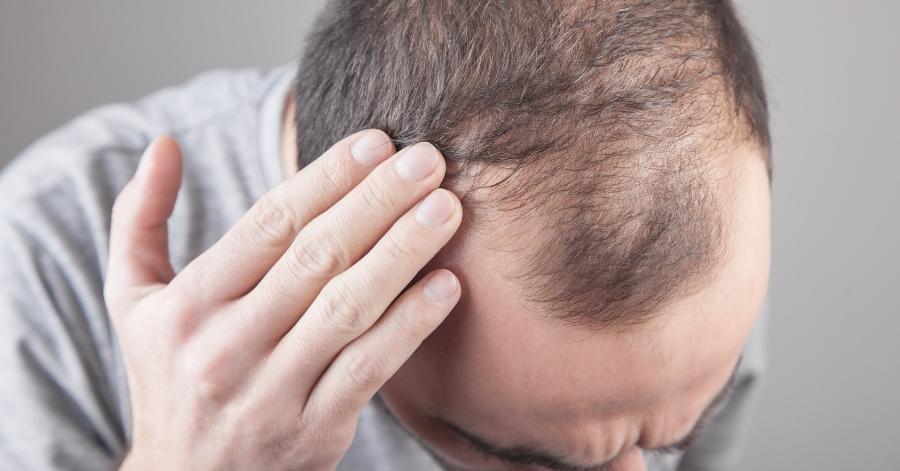
This pattern of delayed diffuse hair loss following a triggering event is called telogen effluvium. It is the most common form of stress-related hair loss and it is characterised by diffuse thinning across the scalp rather than patchy loss in specific areas. Patients often describe running their fingers through their hair and coming away with noticeably more hair than before, or seeing significant fall during washing or combing. The condition can last several months before regrowth becomes visible, which adds to the anxiety of patients who often fear the hair will not come back.
Three Types of Stress-Related Hair Loss
While telogen effluvium is the most common, stress can contribute to hair loss in two other ways that are worth understanding.
Alopecia areata is an autoimmune condition in which the immune system attacks hair follicles, causing sudden patchy hair loss. Psychological stress does not cause alopecia areata, but it is a well-recognised trigger that can precipitate or worsen episodes in people who are genetically predisposed. The hair loss in alopecia areata is characteristically patchy and circular, appearing in distinct round or oval bald patches rather than diffuse thinning. It can affect the scalp, beard, eyebrows, and other body hair. The condition can resolve spontaneously or require treatment depending on its extent.
Trichotillomania is a behavioural condition in which a person compulsively pulls out their own hair, often as an unconscious response to stress or anxiety. It results in irregular, non-symmetric hair loss in areas accessible to the hands, typically the scalp, eyebrows, and eyelashes. It requires psychological support alongside any hair-directed treatment.
How Much Hair Fall Is Too Much?
Normal daily hair loss is between 50 and 100 hairs. This number is difficult to count accurately, but there are practical ways to assess whether your hair fall is within the normal range.
Collecting hair that falls during one session of combing or washing and comparing over several days gives a rough sense of the volume. A simple clinical test is the pull test: gently grasp a small section of 40 to 60 hairs between the thumb and forefinger and pull steadily. Losing more than 6 hairs in a single pull is considered a positive test suggesting active shedding. If you are consistently losing significantly more hair than usual, noticing visible thinning at the parting or temples, or finding hair fall has persisted for more than three months, these are reasons to consult a specialist rather than continuing to monitor.
What Makes Stress-Related Hair Loss Worse
Stress is rarely the only factor at play. Several conditions and nutritional deficiencies frequently co-exist with or worsen stress-related hair loss. Iron deficiency anaemia is one of the most common contributors to hair fall in Indian women and significantly amplifies telogen effluvium when present alongside stress. Vitamin D deficiency, extremely prevalent in India including in Chhatrapati Sambhajinagar, impairs hair follicle cycling. Protein deficiency reduces the building blocks available for hair shaft production. Thyroid dysfunction, both overactive and underactive thyroid, disrupts the hair growth cycle independently and can look identical to stress-related hair loss on clinical presentation. Hormonal changes including polycystic ovarian syndrome (PCOS) in women compound stress-induced shedding. A scalp condition such as seborrhoeic dermatitis
or dandruff creating ongoing follicular inflammation can worsen the situation further. This is why a proper evaluation by a hair specialist matters so much — treating only the stress component while missing an underlying nutritional deficiency or thyroid issue will not produce the recovery the patient expects.
Can Stress-Related Hair Fall Be Reversed?
In the majority of cases, yes. Telogen effluvium is largely a self-limiting condition. Once the triggering stressor resolves and the body returns to a normal physiological state, the prematurely rested follicles re-enter the anagen growth phase and begin producing new hair. Visible regrowth typically begins two to three months after the shedding phase peaks, and full recovery can take six to twelve months. The regrowth hair is often initially shorter and finer, which can feel like thin or changed hair texture before it reaches full length.
Recovery is significantly supported by addressing contributing factors. Ensuring adequate dietary protein intake of at least 0.8 to 1 gram per kilogram of body weight per day gives follicles the material they need to produce hair. Correcting iron, vitamin D, and zinc deficiencies through supplementation under medical guidance accelerates recovery. Topical minoxidil, applied to the scalp, can be used in appropriate patients to stimulate and maintain follicular activity during the recovery phase. Platelet-rich plasma (PRP) therapy, in which the patient’s own blood is processed to concentrate growth factors that are then injected into the scalp, has strong clinical evidence for stimulating hair follicle activity and is available at The Gleam Clinic for patients with persistent or significant hair fall. Stress management itself, through sleep regulation, physical activity, and psychological support where needed, addresses the root trigger rather than only the downstream effect on hair.
When to See a Hair Specialist
Not all hair fall resolves on its own, and waiting too long before seeking evaluation can extend the period of loss unnecessarily. Certain features in the pattern of hair loss suggest that specialist evaluation is needed rather than watchful waiting. Hair loss that is patchy or asymmetric rather than diffuse suggests alopecia areata or another diagnosis requiring specific treatment. Hair loss accompanied by scalp scaling, redness, or itching suggests a primary scalp condition such as seborrhoeic dermatitis or tinea capitis that needs to be treated directly. Hair loss persisting beyond six months after a known triggering event, or hair fall in which regrowth is not occurring, requires investigation to rule out underlying medical causes. Hair loss at the temples and frontal hairline in a characteristic pattern, particularly in women with PCOS or a family history of baldness, suggests androgenetic alopecia which has a different treatment pathway. At The Gleam Clinic in Deolai, the hair assessment includes a detailed history, scalp examination, trichoscopy if indicated, and blood investigations to identify contributing factors and determine the most appropriate treatment plan for each patient.
Conclusion — Your Hair Can Recover. But It Needs the Right Support.
Stress-related hair fall is real, it is common, and in the majority of cases it is reversible. The biology is well-understood: cortisol disrupts the hair growth cycle, follicles prematurely enter the resting phase, and a wave of hair shedding follows weeks later. The delay between the stressful event and the hair fall is what makes it confusing. The reassuring reality is that once the stress is addressed and any nutritional or medical contributors are identified and corrected, most patients recover their hair density. Some need additional support through treatments such as PRP or topical minoxidil, and the specialist team at The Gleam Clinic will advise on whether these are appropriate based on your specific situation.
If your hair fall has been increasing, if it has been going on for more than two to three months, or if you are unsure whether what you are experiencing is within the normal range, the right step is to seek an evaluation. Early assessment leads to faster recovery and saves patients months of unnecessary worry.
Dr. Cholepatil’s The Gleam — Dental, Hair and Facial Aesthetic Center Shop No.106, Deogiri Plaza, Beed Bypass Rd, opposite Hiwale Patil Lawns, Satara Deolai Parisar, Chhatrapati Sambhajinagar, Maharashtra 431009
Call +91 9028975743 or +91 9823699117 | WhatsApp: +91 8766672706
Smile With Confidence. Radiate With Beauty.
FREQUENTLY ASKED QUESTIONS
Q1: Does stress always cause hair fall? Not always, but it is a very common trigger. Significant physical or psychological stress pushes hair follicles prematurely into the resting (telogen) phase of the growth cycle, causing a wave of hair shedding approximately two to three months later. The severity of the hair fall depends on the intensity and duration of stress, as well as the presence of contributing factors such as nutritional deficiencies or underlying hormonal conditions.
Q2: How long after stress does hair fall start? The hair fall typically begins two to three months after the triggering stressful event. This delay occurs because the affected follicles spend approximately two to three months in the resting (telogen) phase before shedding. This is why many patients do not immediately connect their hair fall to the stressful period they experienced weeks earlier.
Q3: Is stress-related hair fall permanent?
In most cases, no. Telogen effluvium, the most common form of stress-related hair loss, is largely reversible. Once the triggering stress resolves and any nutritional or medical contributing factors are addressed, hair follicles re-enter the growth phase and regrowth begins. Visible recovery typically takes six to twelve months from the peak of shedding.
Q4: What is telogen effluvium?
Telogen effluvium is the medical term for diffuse hair shedding caused by a large proportion of hair follicles prematurely entering the resting (telogen) phase of the hair growth cycle due to a triggering event such as stress, illness, surgery, childbirth, rapid weight loss, or nutritional deficiency. It presents as widespread hair thinning across the scalp, typically with no bald patches, and is the most common cause of sudden diffuse hair fall in adults.
Q5: How is stress hair fall different from pattern baldness?
Stress-related hair fall (telogen effluvium) causes diffuse thinning across the entire scalp and is usually triggered by a specific event. It is largely reversible. Pattern baldness (androgenetic alopecia) follows a predictable pattern, typically affecting the frontal hairline and crown in men and the central parting in women, and is driven by genetics and hormones (DHT). It is a chronic, progressive condition requiring long-term management rather than a self-resolving episode.
Q6: What nutrients help in stress-related hair fall recovery?
Iron (especially important in women with heavy periods), protein, biotin, zinc, vitamin D, and vitamin B12 are the nutrients most directly involved in hair follicle health and growth. Deficiencies in any of these can significantly worsen stress-related hair fall and slow recovery. A blood test can identify which, if any, are deficient, and supplementation should be guided by a specialist based on test results rather than taken indiscriminately.
Q7: Can anxiety alone cause hair fall without a major life event?
Yes. Chronic, low-grade anxiety and psychological stress sustained over months, without a single dramatic event, can also trigger or maintain telogen effluvium. The hair growth cycle is sensitive to sustained cortisol elevation, not only to acute stress peaks. Patients who describe ongoing work pressure, relationship stress, or generalised anxiety may develop slow-onset, persistent hair thinning rather than the acute wave seen after a single triggering event.
Q8: What is PRP treatment for hair fall and does it work?
Platelet-rich plasma (PRP) treatment involves taking a small amount of the patient’s own blood, processing it to concentrate growth factors, and injecting it into the scalp at the level of the hair follicles. These growth factors stimulate follicular activity, extend the anagen growth phase, and support recovery from telogen effluvium. Clinical studies support PRP as an effective treatment for hair loss, particularly in combination with other management strategies. It is available at The Gleam Clinic in Chhatrapati Sambhajinagar.
Q9: Is hair fall after COVID-19 related to stress?
Post-COVID hair fall is primarily telogen effluvium triggered by the physical stress of the illness itself on the body. COVID-19 infection places significant physiological strain on the body, which pushes a large number of follicles into the resting phase. The resulting hair fall typically begins two to three months after recovery from
the illness. It follows the same pattern as other forms of telogen effluvium and is largely reversible, though some patients benefit from targeted treatment to support recovery.
Q10: How do I know if my hair fall needs medical treatment or will resolve on its own?
Hair fall that is mild, began after a clear stressful event, and has started to reduce in volume within three to four months is likely to resolve without intervention beyond nutritional optimisation and stress management. Hair fall that is severe, has been ongoing for more than four to six months without signs of improvement, is accompanied by visible scalp changes or patchy loss, or has a strong family history of baldness should be evaluated by a hair specialist. At The Gleam Clinic, a consultation includes scalp assessment, trichoscopy, and blood investigations to determine the cause and the appropriate treatment plan. Call +91 9028975743 to book your appointment.